


What Is Diluted EPS?
Diluted Earnings Per Share (EPS) is a financial metric that shows the quality of earnings per share if all convertible securities were exercised. Convertible securities include options, warrants, convertible debt, and preferred shares. Diluted EPS provides a worst-case scenario for earnings per share and offers a more accurate reflection of a company’s profitability.
How to Calculate Diluted EPS?

Diluted EPS is calculated using the following formula:
Diluted EPS = (Net Income − Preferred Dividends) / (Weighted Average Shares Outstanding + Conversion of Convertible Securities)
This formula adjusts the net income for preferred dividends and the denominator by adding the potential shares from convertible securities.

Why is Diluted EPS Important?
Diluted EPS is essential for investors as it accounts for potential dilution that could occur if all convertible securities were exercised. This metric provides a conservative view of earnings and helps investors understand the potential impact on share value if additional shares were issued.
Analysts use diluted EPS to evaluate a company’s financial performance more accurately. It helps in providing a more conservative and realistic measure of profitability, which is crucial for making informed investment decisions.
Understanding diluted EPS is vital for investors and analysts as it offers a comprehensive view of a company’s earnings potential. By considering the impact of convertible securities, diluted EPS provides a realistic and conservative estimate of earnings per share, helping stakeholders make well-informed decisions.
How to Interpret Diluted EPS
Earnings per share (EPS) is a crucial financial metric that measures a company’s profitability by comparing its net earnings to its current number of shares. Diluted EPS goes a step further by considering the impact of dilutive securities, which are non-common stock securities that can be converted into common stock.
When these securities are exercised, they increase the total number of shares outstanding, reducing the EPS and thus the value of each shareholder’s equity stake.
This metric is valuable for investors as it provides a realistic view of a company’s actual earnings per share, factoring in the potential dilution from convertible securities such as stock options and convertible bonds. Companies with these securities may see a decrease in EPS if the securities are converted into common shares.
Diluted EPS is also an indicator of a company’s financial health, reflecting its ability to generate earnings per share even after accounting for potential dilution. A high diluted EPS suggests strong profitability, while analysts use this metric to compare a company’s financial performance with its competitors.
Key Differences Between Basic and Diluted EPS
- Basic EPS: Only considers outstanding shares.
EPS = (Net Income – Preferred Stock Dividends) / Average Outstanding Shares
- Diluted EPS: Includes all convertible securities that could potentially dilute the earnings per share.
Diluted EPS = (Net Income − Preferred Dividends) / (Weighted Average Shares Outstanding + Conversion of Convertible Securities)
Earnings per share (EPS) measures the value of earnings per outstanding share of common stock and is crucial for assessing a company’s financial health. EPS is reported on a company’s income statement, and public companies must include both basic and diluted EPS in their earnings reports.
The primary difference between EPS and diluted EPS is that EPS does not account for the potential dilution from convertible securities, while diluted EPS does. Basic EPS is calculated by dividing net income by the number of outstanding shares. In contrast, diluted EPS considers all convertible securities, such as options, warrants, and convertible preferred shares, assuming they are converted into common stock. This provides a worst-case scenario for earnings per share.
A significant difference between basic EPS and diluted EPS indicates potential dilution and is closely monitored by analysts and investors.
Impact of Convertible Securities on Diluted EPS
Convertible securities like stock options, warrants, and convertible debt can significantly affect diluted EPS. When these securities are converted to common stock, they increase the total number of shares, diluting the earnings per share. This potential dilution is critical for assessing the true value of a company’s earnings.
How to Find Diluted EPS?
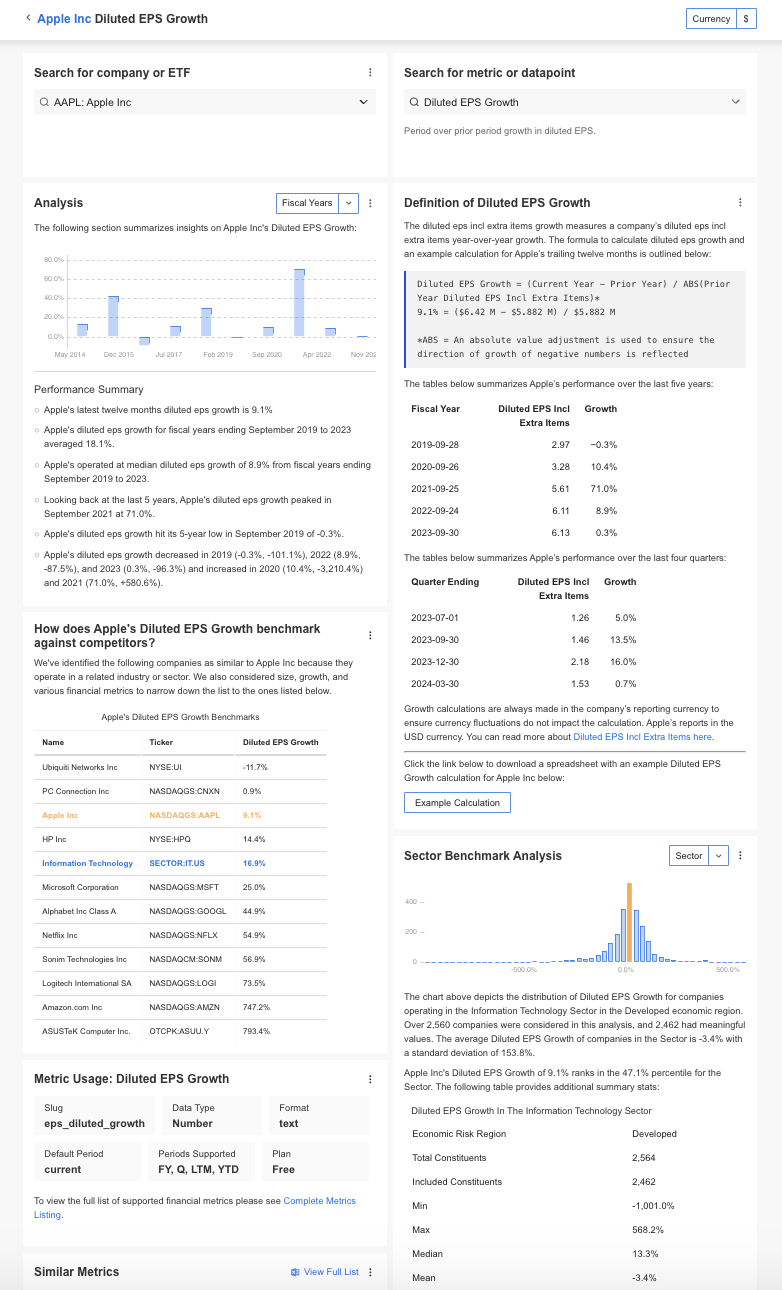
InvestingPro offers detailed insights into companies’ Diluted EPS including sector benchmarks and competitor analysis.
FAQ
Why is diluted EPS important for investors?
Diluted EPS gives investors a clearer picture of a company’s financial health by considering the potential dilution from convertible securities.
How does diluted EPS affect stock valuation?
A lower diluted EPS compared to basic EPS may indicate a higher risk of dilution, which can impact stock valuation negatively.
What is the impact of stock options on diluted EPS?
Stock options, if exercised, increase the number of outstanding shares, which can dilute the EPS and lower the value for existing shareholders.
Can a company have a diluted EPS higher than its basic EPS?
No, diluted EPS is always equal to or lower than basic EPS because it includes the impact of all convertible securities.


 App Store
 Google Play